
How we corrected conflicting facts on our own website
Merchant Context’s plugin page named an older, smaller index. We traced the mismatch and connected the page to the records behind it. This is a worked example of a factual correction, not proof of increased AI recommendations.
What was wrong with Merchant Context’s coverage claim?
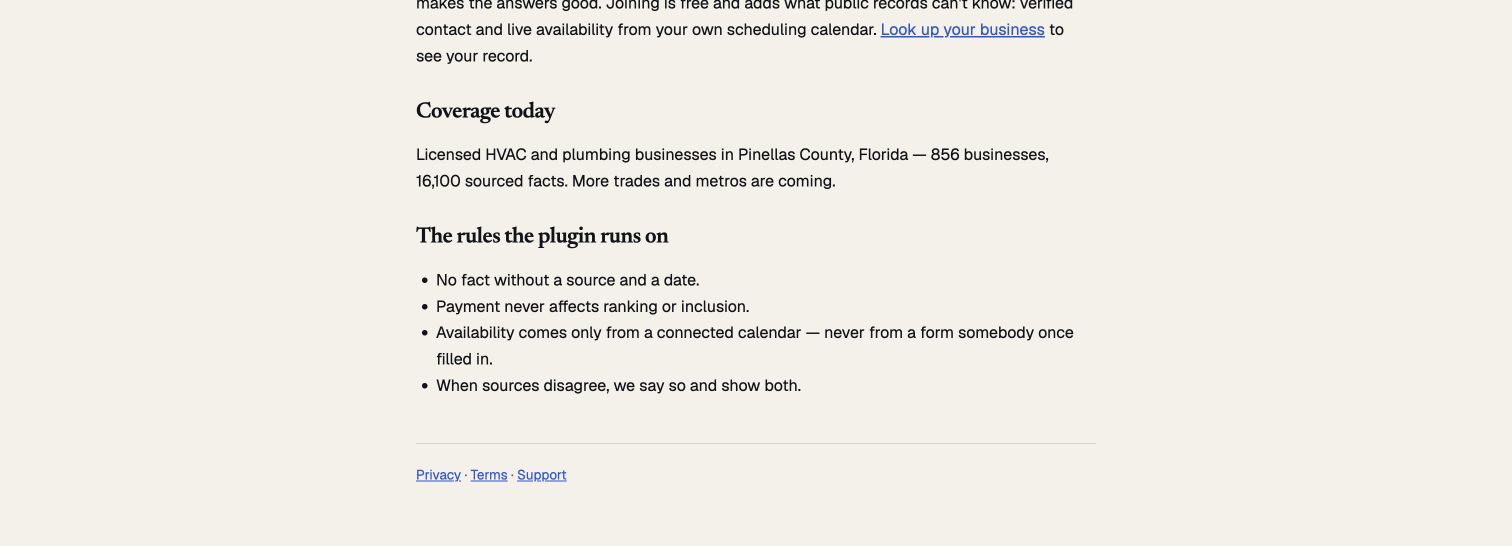
On October 20, 2026, our plugin page said the index covered 856 businesses and 16,100 sourced facts across HVAC and plumbing. Our coverage page and underlying index contained 1,648 licensed businesses across HVAC, electrical, plumbing and roofing. A customer could receive two different answers from the same website.
The plugin page’s figures were written directly into its copy. The coverage page was already generated from the business records. The correction was to make both pages read the same source.
What did we change, and what should you check?
- One source for coverage. The plugin and coverage pages now use the same business count, fact count, trades and location values.
- Dates from evidence. The pages show when the underlying facts were checked. Loading the page does not change those dates.
- Readable without JavaScript. The corrected statement is included in the page’s initial HTML.
- A route to the evidence. The plugin page links to the coverage explanation and searchable records.
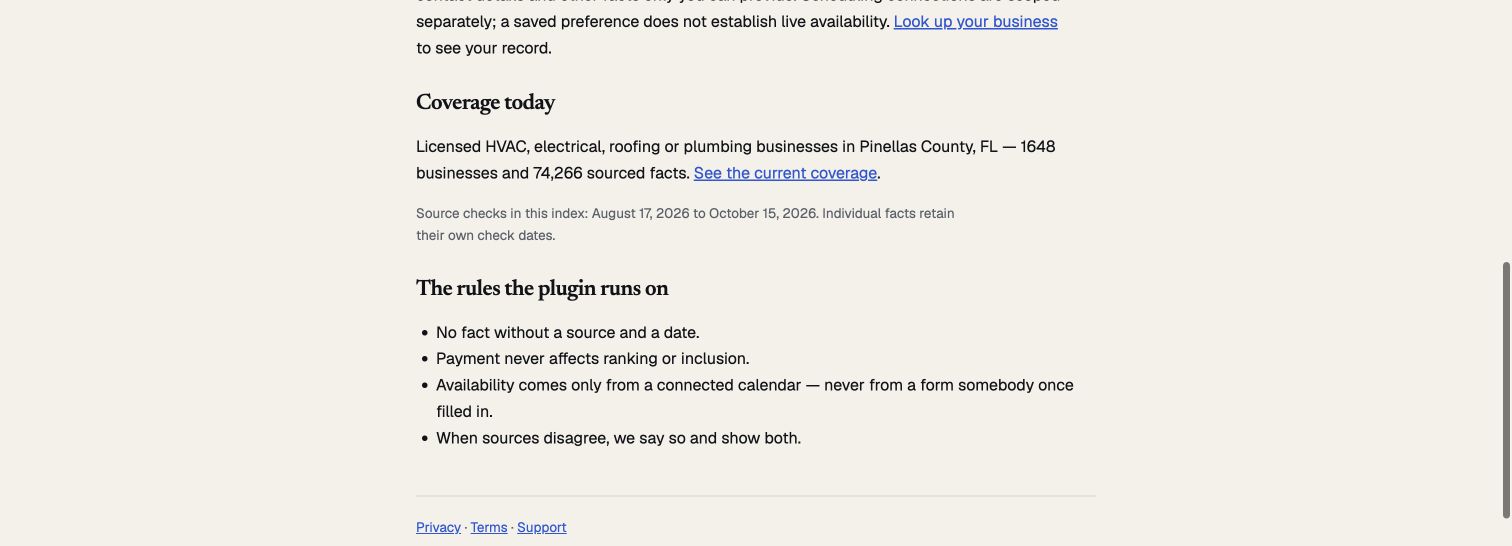
You can inspect the current plugin page and coverage page. Current totals may change as the index changes; these screenshots preserve the example as it appeared on the capture date.
How did we check the correction?
We compared the generated text with the loaded index, checked the initial HTML, followed the coverage link and inspected the rendered page. We also checked that a rebuild can update facts without turning an unrelated navigation change into a newly updated research article.
These checks establish that the website states its coverage consistently. They do not measure whether ChatGPT, Claude or Google recommends Merchant Context more often, or whether more visitors become customers.
What can a business owner take from this example?
Find facts that appear in several places: your service area, hours, prices, licence details or included services. Compare the statements with their source. Where possible, make repeated statements read from one maintained record, with the source’s actual check date.
Keep an old screenshot and record the correction. If you later measure recommendations or inquiries, report those results separately. A website edit is evidence of work completed; it is not evidence that the edit caused a business result.
Questions about this worked example
Is this a customer review?
No. Merchant Context audited and corrected its own website. We have a commercial interest in showing our work. No customer endorsement is implied.
Did this correction improve AI recommendations?
That has not been measured. This example demonstrates a verifiable content correction, not an increase in recommendations, leads or revenue.
Does an automatic date mean every fact was checked today?
No. The displayed date comes from the source record. It changes when new evidence is recorded, not when someone visits the page.
Free homepage preview
See how we would update your website.
Free homepage preview first. $2,000 a month after that, month to month.